This is where a Change Management Risk Assessment becomes critical. It helps organizations anticipate challenges, minimize disruption, and ensure smoother transitions. Instead of reacting to problems after they occur, businesses can proactively manage risks before they impact performance.
What Is a Change Management Risk Assessment?
A Change Management Risk Assessment is a structured process used to identify, analyze,
and mitigate risks associated with organizational change. These risks may involve people,
processes, technology, compliance, costs, or timelines.
Rather than focusing only on what is changing, this assessment focuses on how the
change will affect employees, operations, and business outcomes.
In simple terms, it answers questions like:
- What could go wrong during this change?
- Who will be impacted the most?
- How severe could the impact be?
- What actions can reduce or prevent failure?
Why Change Initiatives Fail Without Risk Assessment
Many organizations underestimate the complexity of change. Common reasons for failure include:
- Employee resistance and low adoption
- Poor communication and unclear expectations
- Skill gaps and training issues
- Operational disruptions
- Budget overruns and delays
- Compliance or regulatory risks
A Change Management Risk Assessment framework helps identify these issues early, giving leadership time to address them before they escalate.
Key Benefits of Change Management Risk Assessment
Implementing a risk-based approach to change delivers measurable business value.
1. Reduced Resistance to Change
By identifying people-related risks early, organizations can plan communication, training, and engagement strategies that increase acceptance.
2. Improved Change Success Rate
Projects with structured risk assessments are more likely to meet timelines, budgets, and performance goals.
3. Better Decision-Making
Leaders gain visibility into potential obstacles and can prioritize actions based on impact and likelihood.
4. Minimized Operational Disruption
Risk assessments highlight process and system dependencies, helping teams avoid downtime or productivity loss.
5. Stronger Compliance and Governance
For regulated industries, risk assessment ensures alignment with legal, security, and compliance requirements.
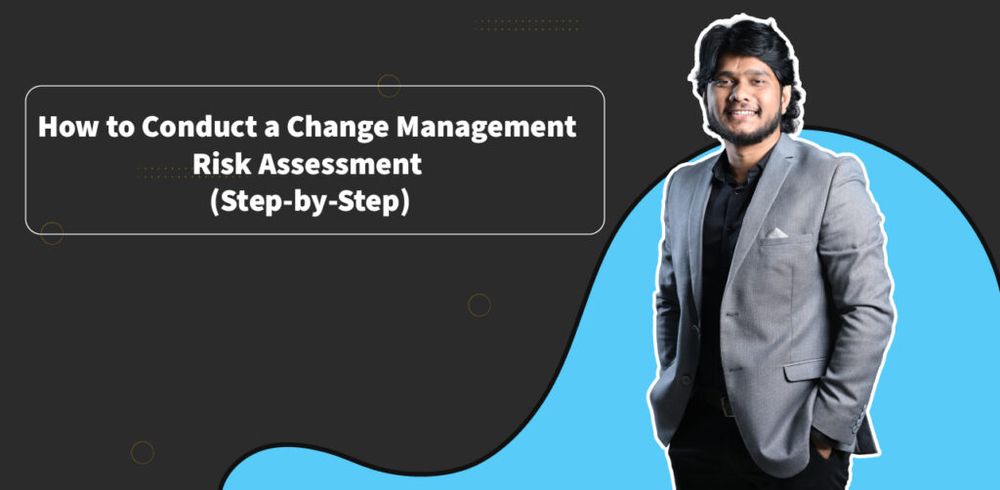
How to Conduct a Change Management Risk Assessment (Step-by-Step)
Step 1: Define the Scope of Change
Clearly outline what is changing:
- Systems
- Processes
- Roles
- Policies
- Organizational structure
This helps avoid overlooking hidden risks
Step 2: Identify Stakeholders and Impact Areas
- List all groups affected by the change:
- Employees
- Managers
- Customers
- Vendors
- Compliance teams
- Assess how each group will be impacted.
Step 3: Identify Risks
Use workshops, interviews, and past project learnings to list potential risks. This is where change risk identification is most important.
Ask:
- What could delay adoption?
- What might cause confusion or resistance?
- Where could errors or failures occur?
Step 4: Analyze and Prioritize Risks
Evaluate risks based on:
- Likelihood (low to high)
- Impact (minor to critical)
This helps prioritize mitigation efforts and focus resources where they matter most.
Step 5: Develop Risk Mitigation Strategies
For each high-priority risk, define actions such as:
- Communication plans
- Training programs
- Process redesign
- Leadership involvement
- Contingency plans
This step transforms risk assessment into actionable change management planning.
Best Practices for Effective Change Risk Assessment
To get the most value, organizations should follow these best practices:
- Involve cross-functional teams early
- Use real data and past project insights
- Communicate risks transparently
- Align risk assessment with business objectives
- Integrate risk assessment into overall change strategy
- Treat risk management as an ongoing process not a one-time activity

How you Begin with your AI First GCC Setup
Why Change Management Risk Assessment Is a Strategic Advantage
Organizations that consistently assess change risks are better positioned to:
- Adapt faster to market changes
- Maintain employee morale
- Protect productivity
- Deliver transformation with confidence
In a business environment where change is constant, risk aware organizations outperform those that rely on assumptions or reactive approaches.
Final Thoughts
A Change Management Risk Assessment is no longer optional it’s a necessity. It turns uncertainty into clarity and risk into opportunity. By identifying risks early, planning mitigation strategies, and continuously monitoring change, organizations can significantly improve the success of their transformation initiatives.
Instead of asking “What went wrong?” after failure, a structured risk assessment helps organizations ask “What could go wrong and how do we prevent it?” That shift makes all the difference.
Related Blogs
Why Businesses Need a People-First Change Management for Success
Change Management Is Evolving—But Are Your Practices Built to Deliver Measurable Impact

From Resistance to Results: Modern Change Management Solutions for Growing Enterprises
Master Change Management: Seamless Strategies for Business Transformation in 2026
How Master Vendor Management Enhances Workforce Partnerships
Data-Driven Change Management: 6 Steps to Smarter Organizational Transformation