What Makes a Resume Stand Out in 2027?
Think about the last time you applied for a job. You probably spent hours checking your experience, adjusting your skills, and making sure everything looked professional. But there is another question worth asking - Does your resume clearly show why you are a good match for this particular role?
That question is becoming more important as hiring shifts toward skills and technology. NACE reported in its 2026 Job Outlook that 70% of surveyed employers use skills-based hiring, with screening and interviewing among the most common stages for applying it.
At the same time, LinkedIn's 2026 research found that 93% of recruiters planned to increase their use of AI in recruiting, while 59% said AI was already helping them discover candidates with skills they might not otherwise have found.
So, what does that mean for you?
A strong resume needs three things:
- Relevance to the job you want
- Clarity for screening and review
- Evidence that you can deliver results
That is the real difference between simply submitting a resume and presenting yourself as a strong candidate.
Why Does ATS Optimization Matter for Job Seekers?
An Applicant Tracking System, or ATS, is used by employers as part of recruiting workflows to organize and manage applications. Depending on the system and employer, resumes may be processed for information such as skills, qualifications, experience, and other job-related details.
But here is where many job seekers get it wrong.
An ATS-friendly resume does not mean filling every section with keywords. It means presenting genuine qualifications in a clear structure that makes your experience easy to identify.
What Should an ATS-Friendly Resume Include?
Start with the basics:
- A clear professional summary
- Relevant job titles and experience
- Skills that genuinely match the position
- Standard section headings
- Education and certifications where relevant
- Clear descriptions of your achievements
Your resume should also reflect the language used in the job description when that language accurately describes your experience.
For example, if a job description asks for "candidate sourcing" but your resume only mentions "finding suitable candidates," you may have relevant experience without using the specific terminology recruiters look for.
The goal is alignment, not repetition.
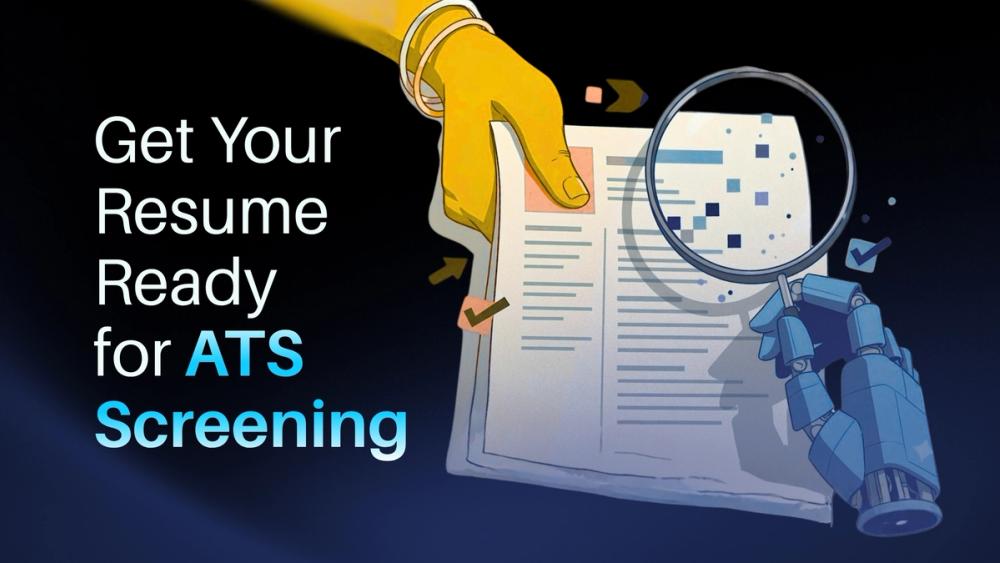
Does an ATS-Friendly Resume Need to Look Boring?
Not at all.
A professional resume can still look polished. The priority should simply be readability. Complicated layouts, excessive graphics, unusual section structures, and decorative elements should never make important information harder to identify.
Keep the design clean enough that a recruiter can quickly answer three questions:
What does this person do? What have they achieved? Why are they relevant to this role?
What Are the Most Useful ATS Resume Tips for 2027?
1. Start With the Job Description
Before changing your resume, read the job description carefully.
Look for the skills, responsibilities, qualifications, tools, and experience the employer repeatedly emphasizes. Then compare them with your own background.
- Do you have those skills?
- Have you used them in a real project?
- Have you achieved a measurable result?
If yes, make that experience visible.
This is one of the simplest ways to make your resume more relevant without rewriting your entire career history.
2. Use Relevant Keywords Naturally
Keywords still matter, but more is not always better.
Suppose you are applying for a recruitment position that mentions candidate sourcing, resume screening, interview coordination, and applicant tracking systems. If you have hands-on experience in these areas, make sure to include them naturally in your skills and work experience sections.
However, repeating the same recruitment keywords several times does not make your resume more effective.
Show your skills through real achievements instead of simply listing them.
For example:
- Sourced and screened qualified candidates, reducing the time required to fill open positions by 25%.
- Coordinated interviews between candidates and hiring managers to improve the recruitment process.
- Used applicant tracking systems (ATS) to manage candidate profiles and track recruitment progress.
The statement gives the reader a skill, an action, and an outcome in one line.
3. Turn Responsibilities Into Results
This is one of the most important improvements you can make.
Many resumes explain what the candidate was responsible for. Stronger resumes explain what changed because the candidate did the work.
| Responsibility-focused | Achievement-focused |
| Sourced candidates for open positions | Sourced X candidates and improved qualified applicant flow by X% |
| Screened resumes and applications | Screened X applications and shortlisted qualified candidates |
| Coordinated candidate interviews | Coordinated X interviews and improved interview scheduling efficiency by X% |
| Managed client accounts | Managed X client accounts while maintaining X% client satisfaction |
| Led a recruitment team | Led X recruiters to fill X positions within the target timeframe |
You do not need to invent impressive numbers. If you have genuine results, use them. If you cannot quantify an outcome, describe the scale, scope, improvement, or business impact honestly.
4. Make Your Professional Summary Specific
Your opening section is valuable space. Don't waste it on phrases that could describe almost anyone.
"Hardworking professional with excellent communication skills" tells the recruiter very little.
Instead, answer:
Who are you? What do you specialize in? What value do you bring?
For example:
Recruitment professional with experience in candidate sourcing, resume screening, and talent acquisition, focused on connecting qualified candidates with suitable job opportunities and supporting efficient hiring processes.
It is clearer, more specific, and immediately connected to a target role.
5. Keep the Formatting Simple
A good resume should not make the recruiter work to find information.
Use:
- Clear section headings
- Consistent spacing
- Readable fonts
- Short bullet points
- Consistent date formats
- A logical experience sequence
Avoid turning your resume into a graphic design project.
Remember, your experience is the product; formatting is the packaging.
What Are the Best Tips for Building a Resume That Recruiters Want to Read?
One of the most useful tips for building resume content that stands out is to keep it clear, relevant, and easy for applicant tracking systems (ATS) to read. Focus on your relevant skills, work experience, and achievements to show employers why you are a good fit for the role.
Creating a resume is not simply about putting your career history onto two pages. It is about deciding which parts of your experience deserve attention first.
Start with the role you want.
If you are applying for three very different positions, a single generic resume may not communicate your strengths equally well for all three.
Instead, adjust the emphasis.
A recruitment role may focus on candidate sourcing, screening, interview coordination, and time-to-fill. A talent acquisition role may emphasize sourcing strategies, stakeholder management, and hiring outcomes. For staffing and recruitment positions, highlight client management, candidate pipelines, successful placements, and your ability to meet hiring timelines.
Your experience has not changed. The way you present its relevance has.
Put Your Strongest Evidence First
Recruiters should not have to search through your resume to understand what you can bring to a role. Put your most relevant experience, skills, and achievements where they are easy to find.
For example, if you are applying for a Talent Acquisition Specialist position, don't simply say:
"Responsible for recruiting candidates for open positions."
That tells the recruiter what you were assigned to do, but not how effectively you did it.
A stronger version could be:
"Managed end-to-end recruitment for technical and non-technical roles, reducing average time-to-fill by 20% while maintaining candidate quality."
The second version gives the recruiter more useful information. It shows what you did, the type of hiring you handled, and the result you achieved.
What Professional Resume Tips Should You Follow at Different Career Stages?
One of the most important professional resume tips is to demonstrate your skills through measurable achievements rather than simply listing responsibilities. For example, instead of writing “Handled recruitment activities,” explain how you sourced candidates, coordinated interviews, or helped fill open positions within a target timeframe.
The right resume strategy also depends on where you are in your career.
For Freshers and Recent Graduates
You may not have years of professional experience yet, and that's okay.
Focus on:
- Internships
- Academic projects
- Certifications
- Relevant coursework
- Technical and professional skills
- Volunteer or project experience
If a college project demonstrates a skill required for the job, it deserves space on your resume.
NACE's recent hiring research also highlights the importance of skills, hands-on experience, and career-readiness capabilities when employers assess early-career candidates.
For Mid-Career Professionals
Your resume should show progression.
Don't simply list five years of responsibilities. Show how your responsibilities expanded, what you improved, and where you created measurable value.
Ask yourself:
What can I show now that I could not show earlier in my career?
That answer often becomes the strongest part of your resume.
For Senior Professionals
At senior levels, the focus should move beyond individual tasks.
Highlight:
- Leadership scope
- Strategic decisions
- Business outcomes
- Team growth
- Revenue or cost impact
- Major initiatives
- Organizational influence
A senior resume should communicate the scale of your contribution, not just the length of your career.
Which Resume Mistakes Should Job Seekers Avoid?
Sometimes improving a resume is less about adding something and more about removing what is not helping.
Too Many Generic Buzzwords
Words such as "hardworking," "motivated," and "team player" are not necessarily bad. The problem comes when they appear without evidence.
Instead of saying you're a strong leader, show the team you led, the initiative you delivered, or the result you achieved.
Keyword Stuffing
Adding every possible keyword can make a resume difficult to read.
Use terminology that genuinely reflects your background. Relevance beats repetition.
Long Paragraphs
Recruiters need to find important information quickly.
Break dense descriptions into short, focused bullets. Each bullet should ideally communicate one meaningful contribution.
One Resume for Every Job
Your career history can remain the same, but your emphasis should change based on the position.
A small amount of customization can make a significant difference in how relevant your experience appears.
What Should You Check Before Sending Your Resume?
Before clicking Apply, take two minutes to review your resume using this checklist:
- Relevance: Does my resume match the requirements of this particular role?
- Keywords: Have I naturally included relevant keywords from the job description?
- Skills: Are my strongest job-related skills easy to find?
- Achievements: Have I highlighted accomplishments rather than just listing responsibilities?
- Formatting: Is my resume clean, consistent, and easy to scan?
- Accuracy: Are my employment dates, job titles, qualifications, and contact details correct?
- Readability: Can a recruiter quickly understand my experience and the value I bring?
Once you've checked everything, read your resume one more time from a recruiter's perspective.
Ask yourself: Can I quickly understand what this candidate brings to the role?
If the answer is no, make a few final improvements before submitting your application.
What Is the Biggest Resume Lesson for 2027?
The biggest shift is simple: stop thinking of your resume as a list of everything you have done. Think of it as evidence of why you are right for the job.
The World Economic Forum's Future of Jobs Report 2025 found that employers expect 39% of workers' core skills to change by 2030, with technology skills, creative thinking, resilience, flexibility, and analytical thinking among the areas gaining importance.
That makes one thing clear: your resume should not only show what you have done in the past. It should also make your current capabilities easy to recognize.
So, when you update your resume, ask yourself:
Does this document show what I can contribute next?
If it does, you're moving in the right direction.
Conclusion
A strong resume in 2027 does not need to be complicated. It needs to be relevant, readable, specific, and honest.
Use job-related language naturally. Show achievements instead of simply listing responsibilities. Keep your formatting clean, make your strongest experience easy to find, and adjust the emphasis for the role you're targeting.
Most importantly, don't try to write a resume for a machine alone. Write one that can move smoothly from screening technology to recruiter review to the interview conversation.
At TekWissen, we understand that successful hiring is ultimately about connecting the right skills with the right opportunities. For job seekers, that same principle starts with making your experience clear, relevant, and easy to recognize.
Frequently Asked Questions
Related Blogs
Are You Prepared for the Biggest Recruitment Process Outsourcing Challenges HR Leaders Must Address
Why Aren't You Getting Interview Calls? Job Search Tips That Work
AI Is Screening Your Resume First: Here's How to Get Selected
What Are Ghost Jobs? How to Spot Real Job Opportunities

Reimagining Talent Acquisition: RPO in the Future Workforce Ecosystem
Why Recruitment Process Outsourcing Is Dominating Hiring Strategies in 2026 and Beyond